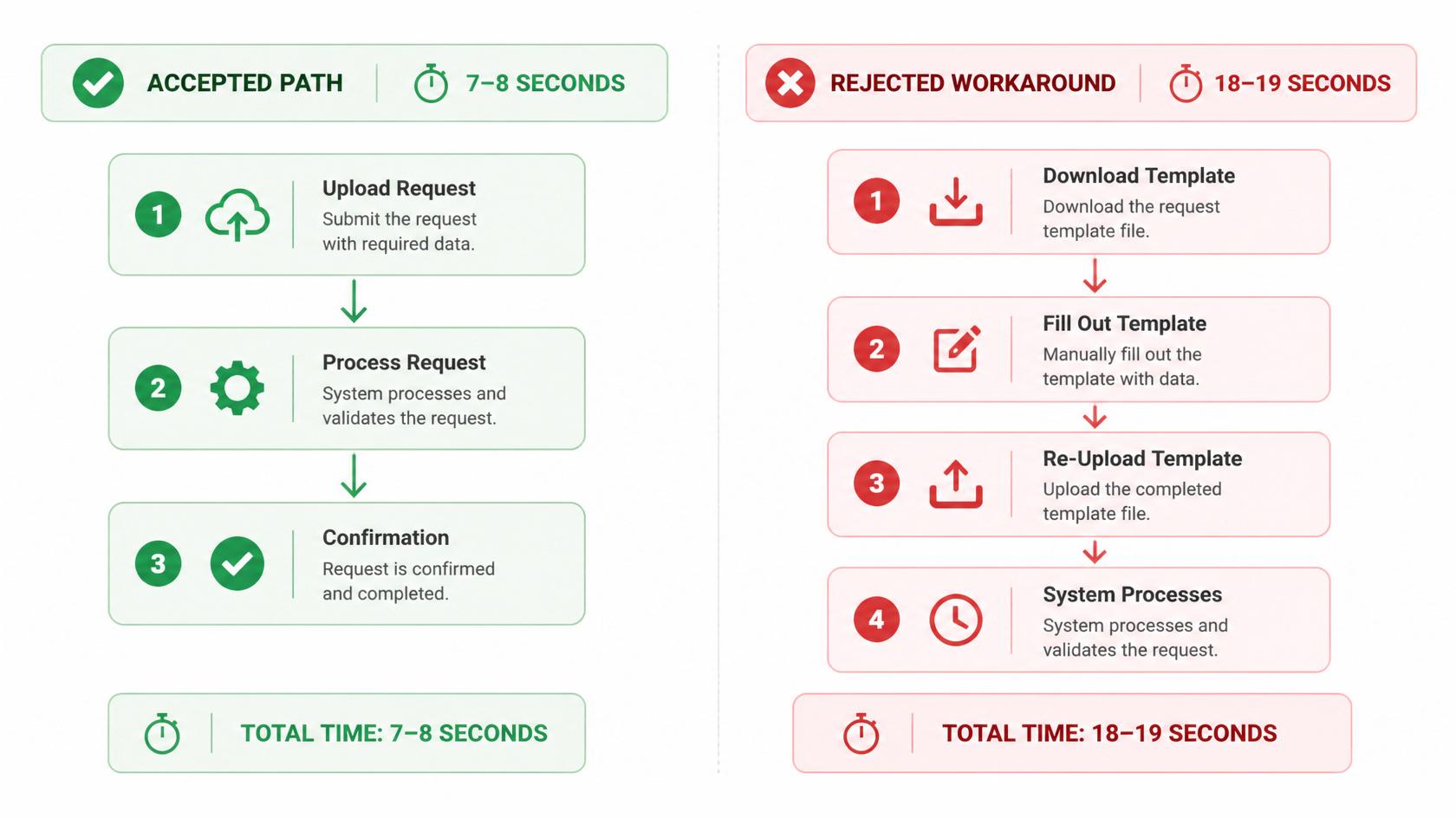
Current path
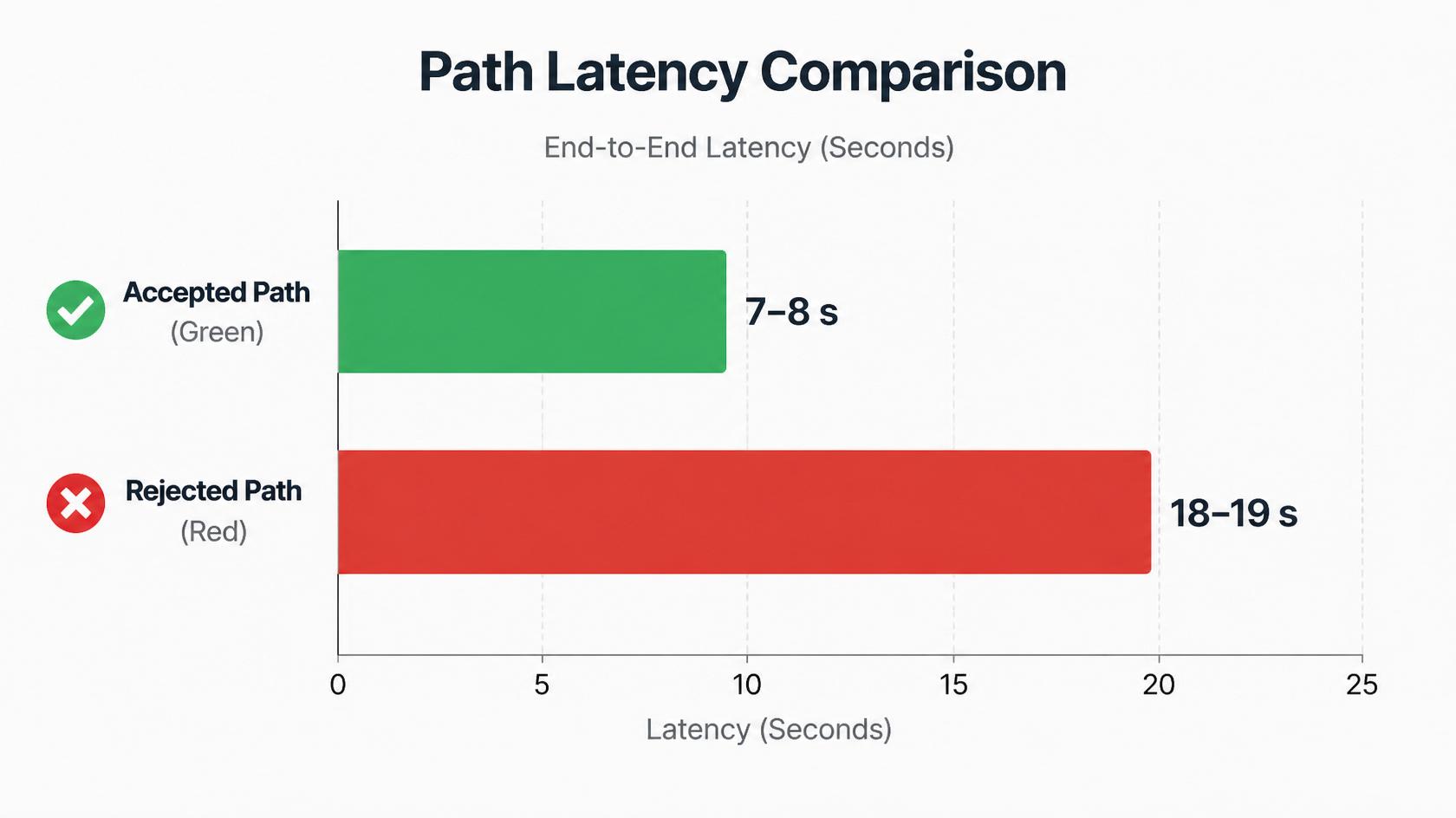
7-8s class
TTS workaround
18-19s class
Decision
Rejected
Accepted direction
-> Generate response through Atina orchestration
-> Prepare text and avatar-ready playback signals
-> Deliver assistant response
Rejected workaround
-> Generate text response
-> Send text into a second TTS request
-> Reconcile text, audio, and avatar timing
-> Deliver slower assistant response
Decision
Atina rejected the Gemini TTS orchestration workaround for production avatar responses. The decision was architectural, not a statement about the quality of Gemini or any regional AI capability. The workaround produced a pipeline shape that did not meet Atina user-experience requirements.Context
The Atina avatar experience needs response text, audio behavior, and synchronization readiness to arrive in a way the 3D assistant can use. A tempting workaround was to first request the normal Gemini text response, then send that text through a separate Gemini TTS step, then reconcile the result with Atina avatar playback. That approach preserved the desired output shape, but it added another network and orchestration stage in the critical path.Benchmark Outcome
In latency debug testing, the current Atina path typically stayed around 7 to 8 seconds for normal-length avatar prompts. The two-step Gemini TTS workaround usually landed around 18 to 19 seconds for similar prompts. The added delay was visible enough to make the assistant feel less responsive.Architectural Reasoning
Speech in an assistant is not evaluated only by audio quality. It must also fit the conversation loop. For Atina, the acceptable path must preserve text availability, avatar timing, low perceived latency, error handling, and simple recovery when a stream fails. A second generation pass made the system slower and harder to reason about without creating enough product value to justify the tradeoff.What Was Kept
Atina kept the existing orchestration direction and will continue testing speech options that either reduce latency or preserve the current latency budget. A future speech route can be adopted when it provides a cleaner single-pass or near-single-pass path for text, audio, and avatar synchronization.Public Safety Boundary
This note publishes the decision and observed latency class, but not private prompts, credentials, service configuration, vendor keys, or internal implementation files.